


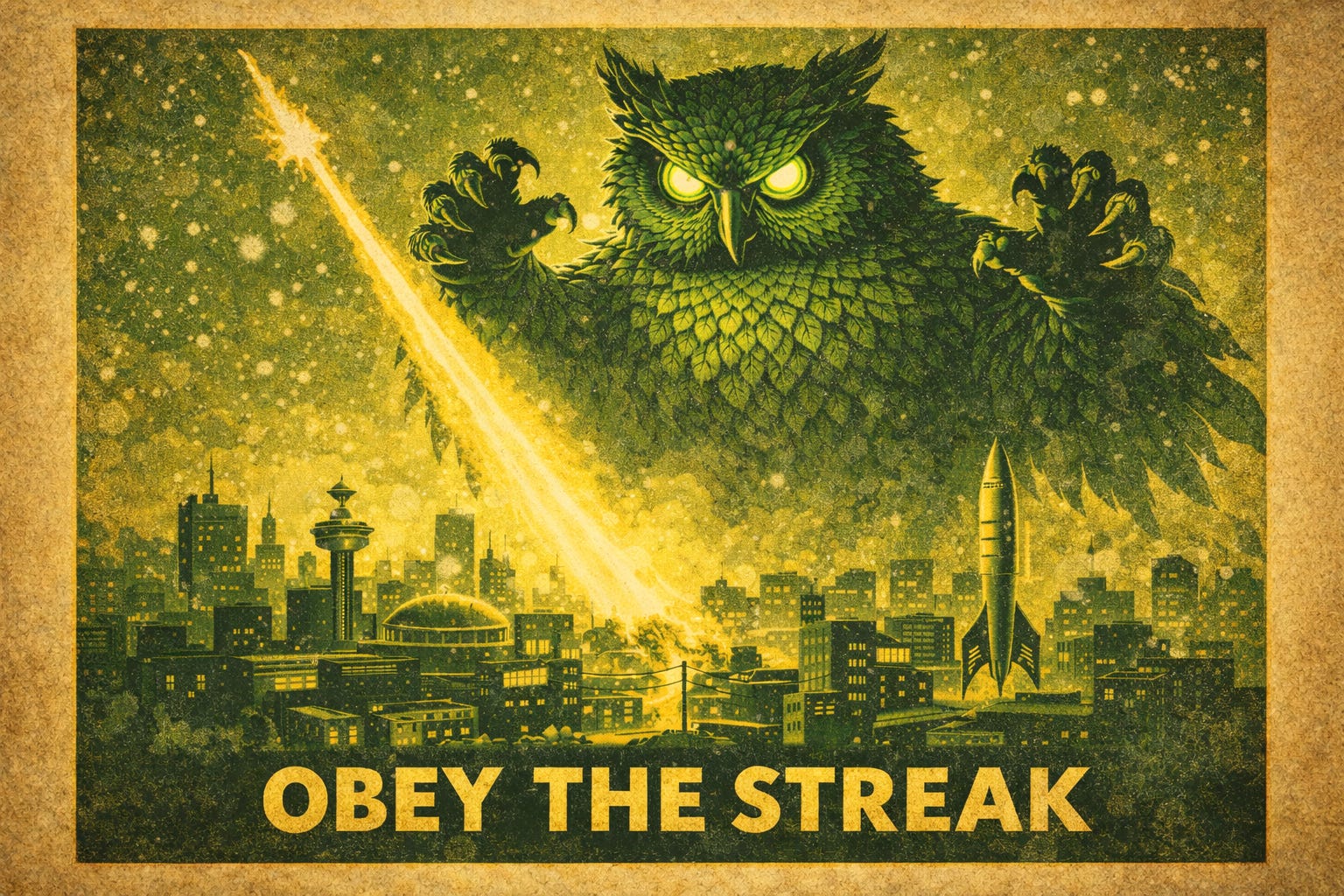
In the “Wasteland” of the app store, there is a question that divides the room: Is Duolingo a school, or is it a video game?
On one hand, their mission is noble: “To develop the best education in the world and make it universally available.” They are the “Sesame Street” of the smartphone era, offering their entire core curriculum for free.
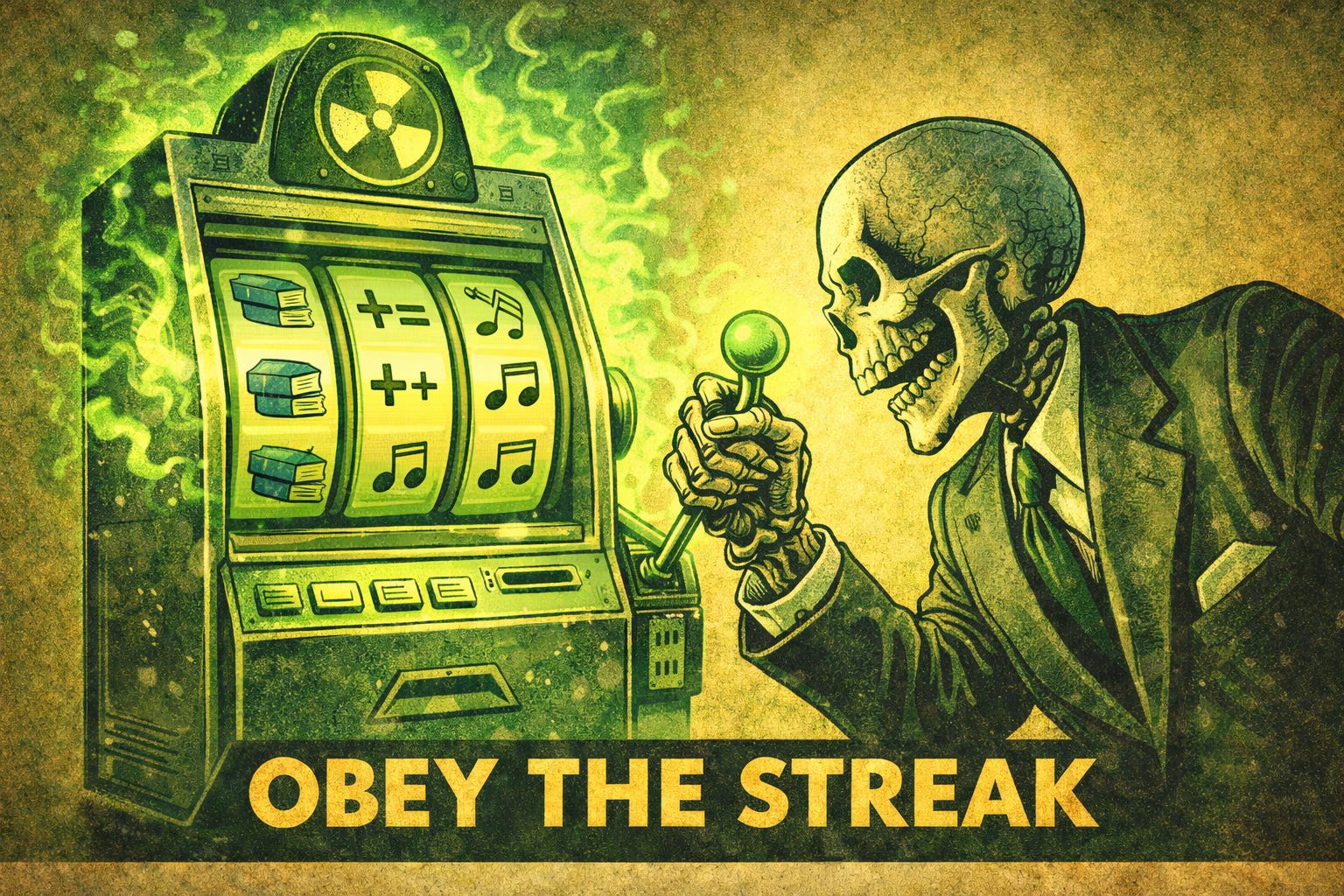
On the other hand, they behave like a casino. They employ more game designers than linguists. They A/B test every sound effect to maximize addiction. They use a “Streak” mechanic so powerful that users will pay real money just to repair it out of shame.
So, which is it? Is it a tool for self-improvement, or is it Candy Crush for people who want to feel smart?
Here in the Bunker, we don’t guess. We look at the blueprints. And the blueprints show something fascinating: It is a casino that funds a university.
THE TENSION: WHAT THEY SAY VS. WHAT THEY DO

To understand the business, you have to look at the contradiction between their mouth and their hands.
1. What They Say: “We Are an Education Company”
The Mission: They genuinely offer the entire core product for free. Unlike competitors like Rosetta Stone or Babbel, who hide their lessons behind a paywall, Duolingo gives the product away. This destroys the pricing power of competitors and ensures they remain the default starting point for 90% of language learners.
The Spend: If they were just a greedy mobile game, they would spend their cash on user acquisition (Marketing) to buy traffic. They don’t. They rely on “product-led growth.” Instead, they pour their cash flow into R&D. They hire PhDs to build “BirdBrain” AI models to personalize learning, investing in the “tutor” rather than the “ad”.
2. What They Do: “We Run a Behavior Lab”
The Metric: They don’t just optimize for “fluency”; they optimize for “Time to Dopamine”.
The Tactics: They run thousands of A/B tests daily on over 100 million users. They know exactly which button color, sound effect, and “guilt-trip” notification will keep you in the app for 5 more minutes.
The Lock: The “Streak” isn’t a pedagogical tool; it’s a retention hook. It creates a psychological switching cost where leaving the app feels like “breaking the chain” of your own discipline.
THE SYNTHESIS: THE “GAME” PAYS FOR THE “SCHOOL”
This is where the magic happens. The “Game” side of the business solves the two biggest problems in the “Education” business: Motivation and Money.
1. Solving Motivation (The Broccoli Problem) Most people want to learn a language, but they lack discipline. Traditional education assumes you have willpower. Duolingo assumes you have none. By wrapping the “broccoli” (learning) in “dessert” (gamification), they keep users around long enough to actually learn something. The “Game” keeps them in the seat; the “School” does the teaching.
2. Solving Money (The Zero-CAC Engine) Because the “Game” is so viral (memes, leaderboards, streaks), Duolingo doesn’t have to pay for users.
The Anomaly: Most app companies burn cash on ads. Duolingo relies on Word of Mouth and viral social media moments.
The Result: Since they don’t pay for users, they have elite Gross Margins (~73%). This “free” traffic generates the cash that funds the expensive AI research.
3. The Data Flywheel This is the ultimate “Scale Economies Shared.”
The Input: Free users generate billions of interactions per day.
The Process: Every time a free user makes a mistake, the “BirdBrain” AI learns. The free users are effectively the “worker bees” training the Queen Bee (The AI Tutor).
The Moat: A competitor can copy the interface, but they cannot copy the decade of behavioral data. To catch up, they would need 100 million users training their algorithm for ten years.
THE NUMBERS (EVIDENCE OF THE PARADOX)
The financials prove that this hybrid model is working better than pure-play education or pure-play gaming.
The Revenue: It has exploded from $250M in 2021 to a run rate of ~$964M today. The “Game” monetizes incredibly well.
The Profit Pivot: They flipped from burning cash to generating profit. Operating Margin swung from -24% in 2021 to +11% in 2025.
The Float: Because users pay subscriptions upfront to keep playing the “Game,” Duolingo sits on a massive pile of cash. Operating Cash Flow ($364M) is 3x higher than Operating Income ($106M). This “float” allows them to invest aggressively in new verticals like Math and Music without touching debt.
THE VERDICT
So, Education or Game?
I believe it is a game that creates a public good.
If Duolingo were just a school, it would be boring and broke. If it were just a game, it would be profitable but useless (like Zynga).
By being both, they have built a “Scale Economies Shared” monster. The “Game” captures the attention of 100 million people, and the “School” uses that data to train the world’s best AI tutor.
Stay rational.
DISCLAIMER
The Atomic Moat is a financial publisher, not an investment advisor. All content is for informational and entertainment purposes only and does not constitute financial advice. The author is not a licensed financial professional. Risk Warning: Investing in financial markets involves a high degree of risk, including the potential loss of your entire investment. Past performance is not indicative of future results.
Disclosure: The author may hold positions in the securities discussed in this transmission. Specific holdings will be disclosed in the “Portfolio” section for paid subscribers.