


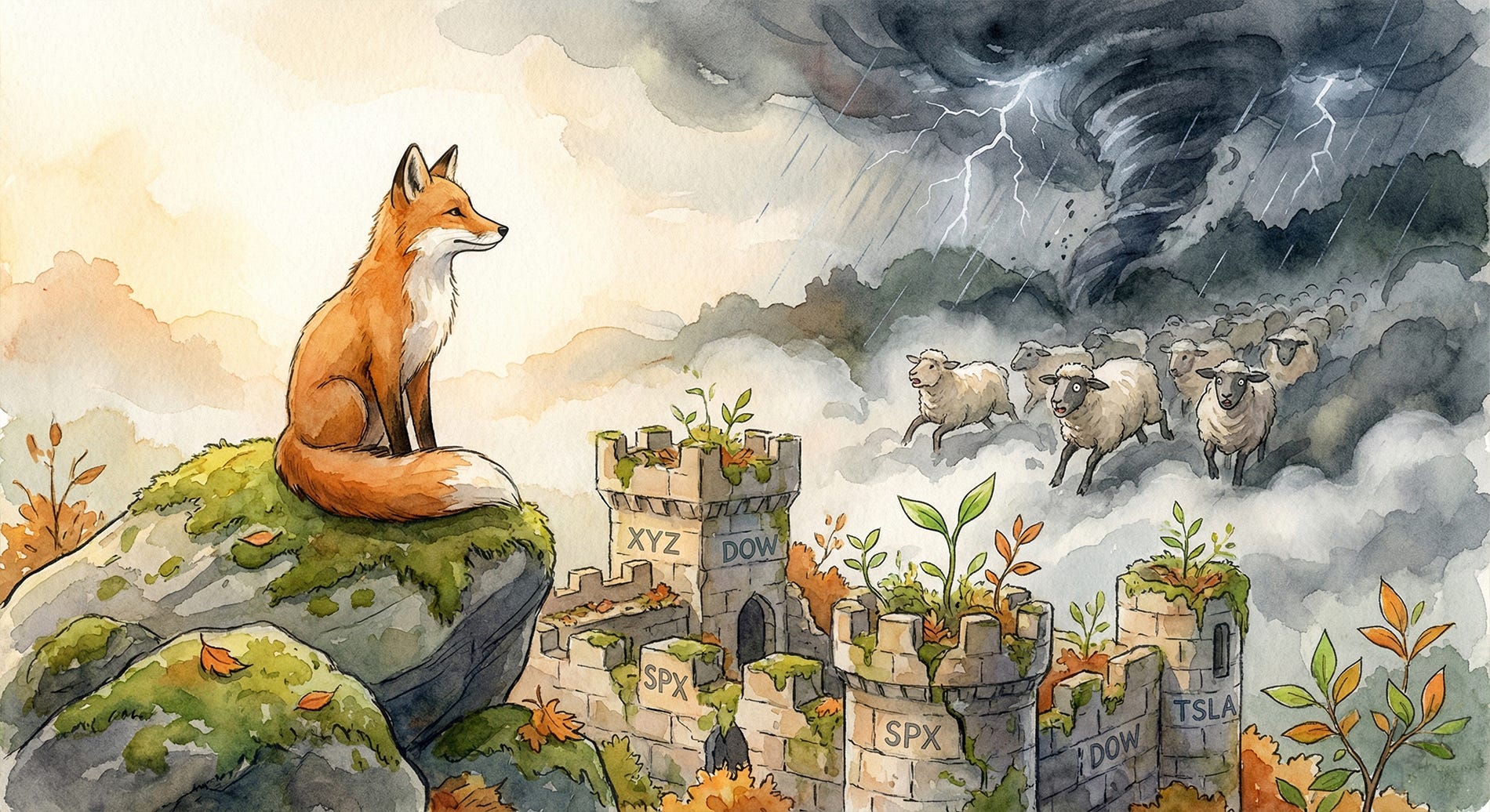
The market is currently in the middle of a massive “vibe shift” regarding the software sector. As I write this today, January 30th, he sentiment has turned from “software is eating the world” to “AI is eating software.”
Investors are looking at giants like Salesforce and Adobe and seeing dinosaurs. They are panicking over “seat contraction” and “code automation,” assuming that a generic LLM can replicate twenty years of specialized enterprise logic and data collection over a weekend.
This is where the opportunity lies.
But to capitalize on it, you have to be willing to do the one thing most investors find physically painful: go against the crowd.
The Psychology of Outperformance: Why Being a Contrarian is Hard
Outperformance is, by definition, a result of doing something different than the majority. If you follow the herd, you are guaranteed herd-like returns (minus fees).
Right now, the herd is sprinting away from SaaS. To stay behind and buy requires a specific type of mental fortitude. You have to be okay with being “wrong” in the eyes of the market for months, or even years.
As John Maynard Keynes famously noted:
“The market can remain irrational longer than you can remain solvent.”

This is why patience and position sizing are more important than your thesis.
Being right too early feels exactly like being wrong.
If you use “reckless” leverage or bet the entire portfolio on a single “bottom,” you might be forced to sell your position right before the recovery happens.
The “Graveyard” of Great Returns: History’s Favorite Head-Fakes
One of the most valuable lessons for any investor is that the crowd is most certain of a “death” right before a rebirth. When a sector feels like “dead money,” it’s often because the market has priced in a permanent catastrophe that rarely arrives.
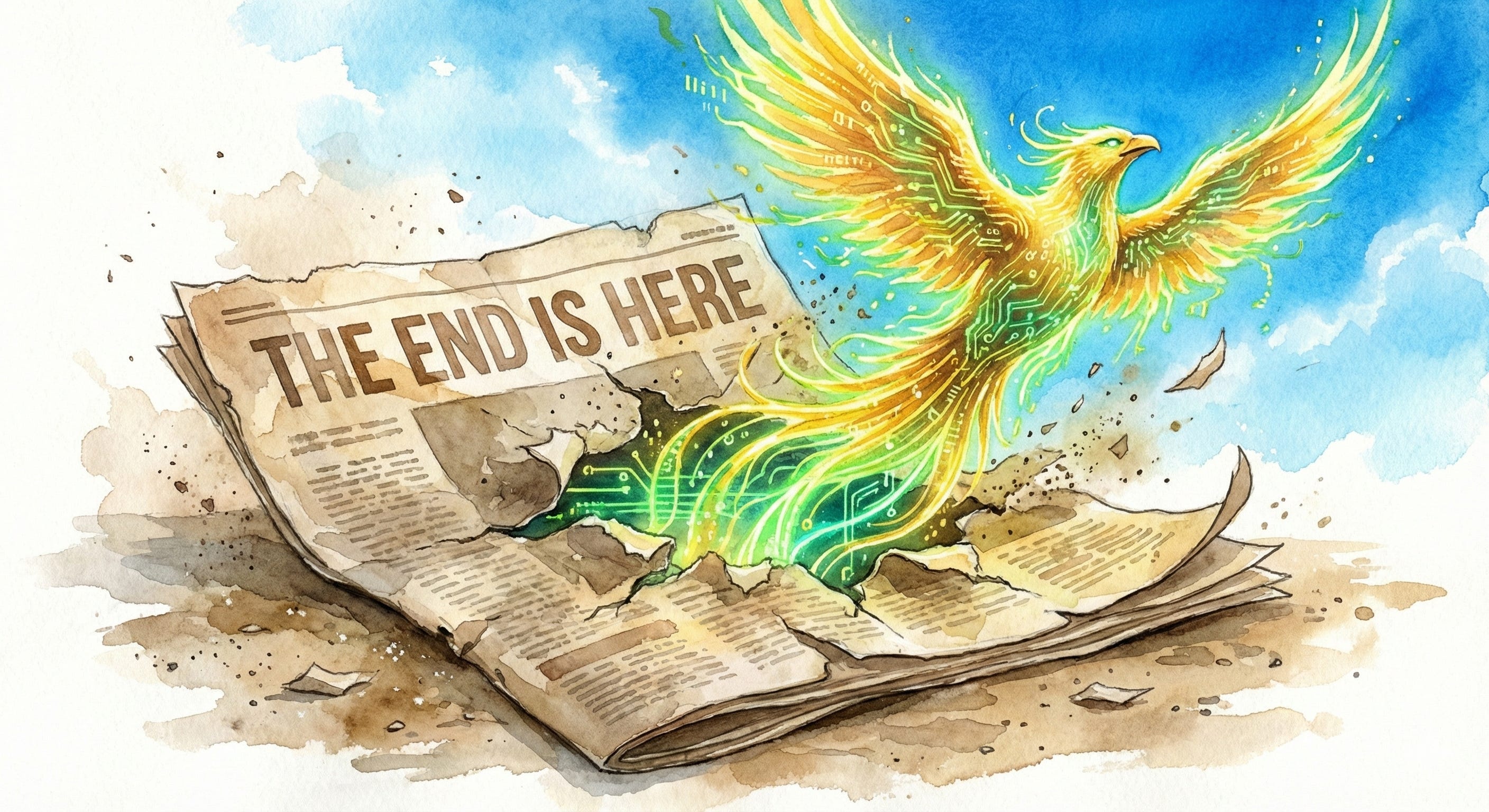
To outperform, you have to be a historian of hysteria. Here are three times the market held a funeral for a sector that was actually just taking a nap:
1. The “Death of Equities” (1979)
The Vibe: In August 1979, BusinessWeek published its infamous cover story: “The Death of Equities.” Inflation was rampant, and the consensus was that stocks were a fool’s game compared to gold or real estate.
The Reality: If you bought the S&P 500 the day that magazine hit the newsstand, you bought at the absolute bottom of a generational bull market. The market didn’t die; it was just resting before a 20-year sprint.
2. The “Dead Money” Giant (Microsoft, 2000–2013)
The Vibe: For 13 years, Microsoft stock went nowhere. It was called “Dead Money.” The narrative was simple: “The PC is dead, mobile is the future, and Microsoft missed the boat.” Sound familiar? It’s the exact same logic used against Salesforce today.
The Reality: While the stock price slept, the company was building Azure. In 2014, the cloud narrative took hold, and the “dead” dinosaur became the most valuable company on earth.
3. The “Uninvestable” Sludge (Energy, April 2020)
The Vibe: On April 20, 2020, oil prices went negative (-$37 per barrel). The world was in lockdown, and ESG mandates were forcing funds to dump fossil fuels. The sector was declared “uninvestable.”
The Reality: That moment marked the bottom. In 2021 and 2022, Energy was the single best-performing sector in the S&P 500, crushing the “high-growth” tech stocks that everyone loved in 2020.
The Lesson: The market always over-corrects. It extrapolates current pain into eternal doom. Today, the headline is “AI Kills SaaS.” If history is a guide, the tombstone is already being engraved—which means it’s time to buy.
Alright, let’s go through some quality companies that have been sold off massively lately.
The “Systemic” Software Winners

We aren’t looking for companies that merely write code. We are looking for those that own the relationship and the data.
The Heavyweights: ServiceNow (NOW) & Salesforce (CRM)
The market is pricing these as if AI “agents” will replace the need for their platforms.
The Atomic Moat: These are the Operating Systems of the enterprise. Even if AI automates a task, that task still needs to be logged, governed, and integrated into the rest of the business. You don’t move a company’s entire sales history (CRM) or IT workflow (NOW) because of a new bot. You just plug the bot into the existing system.
The Vertical Specialists: Veeva (VEEV) & FactSet (FDS)
The Atomic Moat: These companies live in the world of Verified Truth.
Veeva owns the regulatory pathway for Life Sciences. An AI can suggest a drug, but it can’t manage the legal compliance of a clinical trial.
FactSet owns the high-fidelity financial data that professional traders require. In an AI world where “hallucinations” are common, clean and verified data becomes a premium asset, not a commodity.
The “Emotional” and “Infrastructure” Moats
Adobe (ADBE): Everyone is obsessed with AI video generators. They forget that professional creators need a collaborative workflow. Firefly (Adobe’s AI) isn’t a competitor to Photoshop; it’s a feature that makes Photoshop users 10x faster.
Duolingo (DUOL): The “AI Victims” narrative says real-time translation makes learning French useless. The “Atomic Moat” reality says Duolingo is a habit-forming entertainment product. People use it for the streak, the social competition, and the dopamine. AI just makes the lessons better.
The Trade Desk (TTD): As AI generates more “junk” content on the web, advertisers are desperate for “Premium” placements. TTD is the gatekeeper of quality in the open internet.

The Rollups: Constellation (CSU.TO) & Topicus (TOI.V)
While the market worries about software obsolescence, Mark Leonard and the team at Constellation Software are likely smiling.
The Logic: These are “Rollup” kings. Their “moat” isn’t a specific piece of software; it’s their Capital Allocation.
The Opportunity: When the market gets “irrational” and punishes small, niche software companies, the acquisition multiples drop. This allows Constellation and its spin-off, Topicus, to buy mission-critical, “boring” software at prices that guarantee massive future returns.
So, Don’t Mistake a Reset for a Ruin

The current sell-off in SaaS is to me a classic example of the market over-extrapolating a new trend (AI) to its most destructive conclusion.
If you are building an Atomic Moat portfolio, your job is to identify which companies have “Systemic” value that AI cannot easily replicate.
Then:
Be Contrarian: Buy when the narrative is “The sector is dead.”
Be Patient: Don’t expect a V-shaped recovery by next Tuesday.
Be Solvent: Avoid reckless positioning so you can survive the market’s irrationality.
The herd is still running from the fire, screaming that the forest is burning down. But the fire has merely cleared the brush, revealing the strongest trees standing taller than ever.
The fox knows that this isn’t the end of the forest; it’s just the beginning of the feast. Stay quiet. Stay patient.
And happy hunting.
Disclaimer: The content of Atomic Moat is for educational and entertainment purposes only and does not constitute financial, investment, or legal advice. I am not a financial advisor, and these are not recommendations to buy or sell any security.
Risk Warning: Investing in equities, especially in the technology sector, involves a high degree of risk. The market is irrational, and prices can fluctuate wildly. Please do your own due diligence (DYODD) and consult with a certified professional before making any investment decisions.
Don’t blame the fox if you get bitten.
This is one of my primary investment themes for '26. I've started nibbling on enterprise software names. I'm early, but I find it easier to monitor them when I have small (.2%) positions.
I'm in the IT industry, use tools like CRM and NOW, and I can say with confidence that those thinking AI's going to replace imbedded software really doesn't understand much about - well, about enterprise software. The private data housed inside the software can only be accessed and interpreted by the software - or accessed via APIs but that's limited compared to what's needed for inference. So the enterprise software co's control the ability of AI agents to access the data. That's game over - they keep their moat and build on it. Unmaintainable AI-generated code isn't going to displace these systems that companies run on - not anytime soon.
$NOW I can't bring myself to buy - because IMO it's just terrible, terrible software that lowers the productivity of everyone using it. Maybe that means the agents will be even more valuable, but I'll have to see it first.
Thank you for this very well written and reflected article. I like how put AI and the software leaders back into perspective. For example I looked at Salesforce from a fundamentals perspective and found a pattern that signals pure strength rather than weakness. The company is becoming an economic powerhouse with strong cash generation potential. This definitely adds to your findings.