



On a typical afternoon at Columbia Business School, a man stands before a room of high-octane MBA students. He isn’t lecturing on complex derivatives or stochastic calculus. Instead, he’s talking about a gum-selling scheme and a broccoli stand.
This is Joel Greenblatt.
Between 1985 and 1994, his hedge fund, Gotham Capital, achieved the financial equivalent of a moon landing: compounding capital at 50% annually (34% net of fees). To put that in perspective, if you had handed him $10,000 at the start, you would have been looking at roughly $576,000 just ten years later.
Greenblatt is the “Investor-Educator” who proved that you don’t need a supercomputer to beat Wall Street; you just need a “Magic Formula” and a stomach that doesn’t churn when the crowd runs away.
The Origin Story: The $7 Million “Bet on the Weird”
Before he was the “Magic Formula” guy, Greenblatt was a hunter of the weird.
He graduated from Wharton with his BS (1979) and MBA (1980), but he didn’t find his edge in a textbook. He found it in “Special Situations”; the messy corporate events like spin-offs, mergers, and restructurings that big institutions often ignore.
In 1985, Greenblatt started Gotham Capital with $7 million, partly backed by Michael Milken. His catalyst was the realization that the market is often a distracted giant. When a large company “spins off” a small division, institutional investors often dump the shares because the new company is “too small” for their mandates. Greenblatt realized these were “secret hiding places” for massive returns.
In other words, his “unfair advantage” wasn’t a supercomputer; it was a willingness to look where others were too lazy to go.
His most legendary “bet on the weird” involved the 1993 spin-off of Host Marriott.
Marriott decided to split its business into two: a “good” company (Marriott International) and a “bad” company (Host Marriott) loaded with the parent firm’s massive debt. Predictably, institutional investors treated Host Marriott like toxic waste, dumping their shares immediately because they didn’t want a debt-heavy “bad” company in their portfolios.
But Greenblatt did the “qualitative work” others found too tedious.
He realized that the market was so distracted by the debt that it was ignoring the actual cash-flow machine underneath.
By buying the spun-off shares and long-term “Leaps” (options) while the “distracted giant” of the market was panicking, Gotham captured a multi-bagger return as the business’s true value was eventually weighed.
It was the ultimate proof that the market is a voting machine in the short run, but a weighing machine in the long run.

The Superpower: The Magic Formula
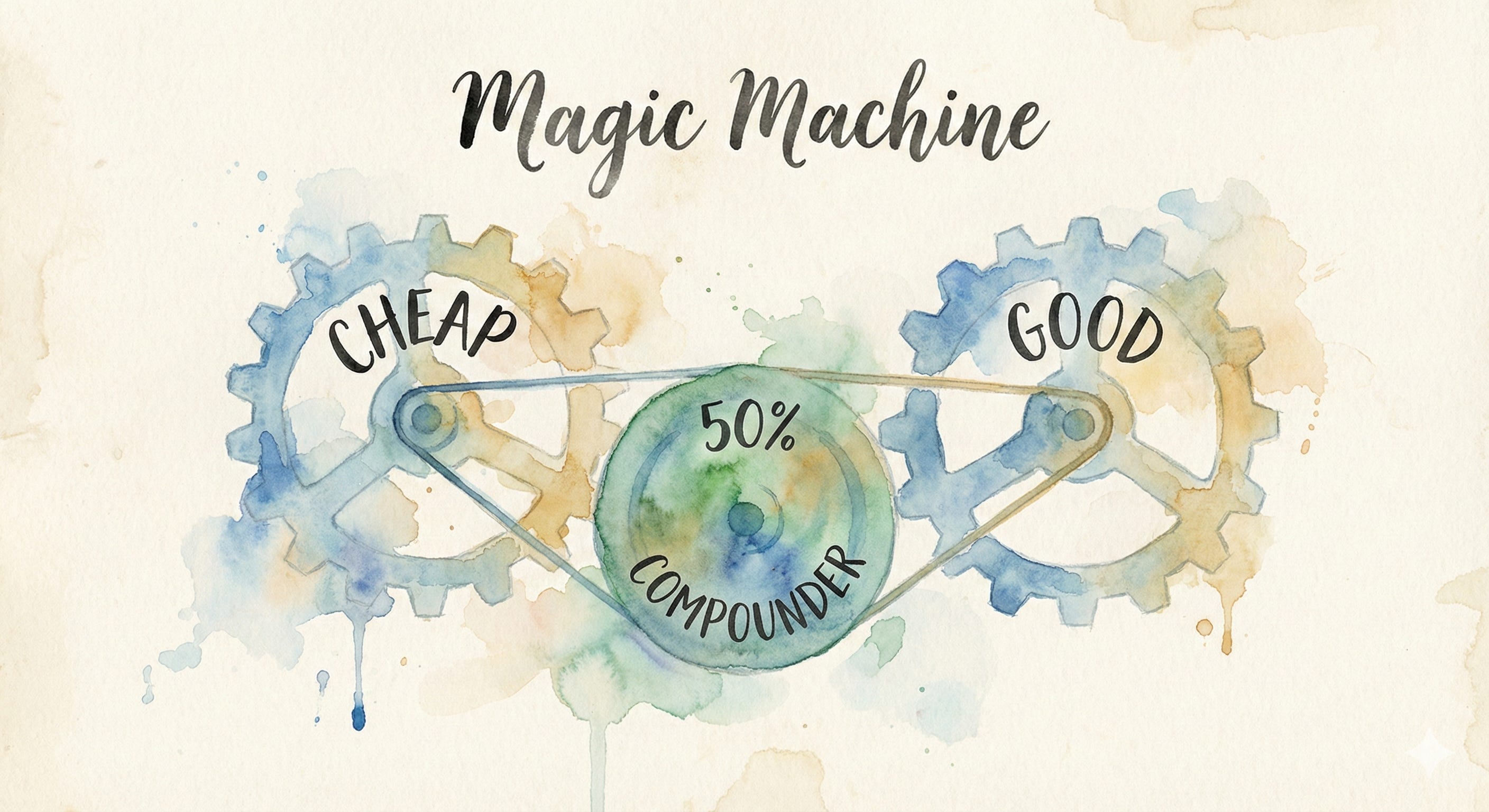
Greenblatt’s greatest contribution to finance is his ability to distill the genius of Benjamin Graham and Warren Buffett into a mechanical, two-step machine. He wanted to find “Above-average companies at below-average prices.”
To do this, he ignores the thousands of confusing data points on a Bloomberg terminal, strips away the market noise and focuses on just two gears:
1. The “Cheap Price” Metric: Earnings Yield
The Formula: EBIT / Enterprise Value
The Goal: This measures how much a business earns relative to its total price (including debt and cash). It’s how you find the bargains.
2. The “Good Business” Metric: Return on Capital
The Formula: EBIT / (Net Working Capital + Net Fixed Assets)
The Goal: This measures how efficiently a company uses its assets to generate profit. It’s how you find the “money-printing machines”.
The Process:
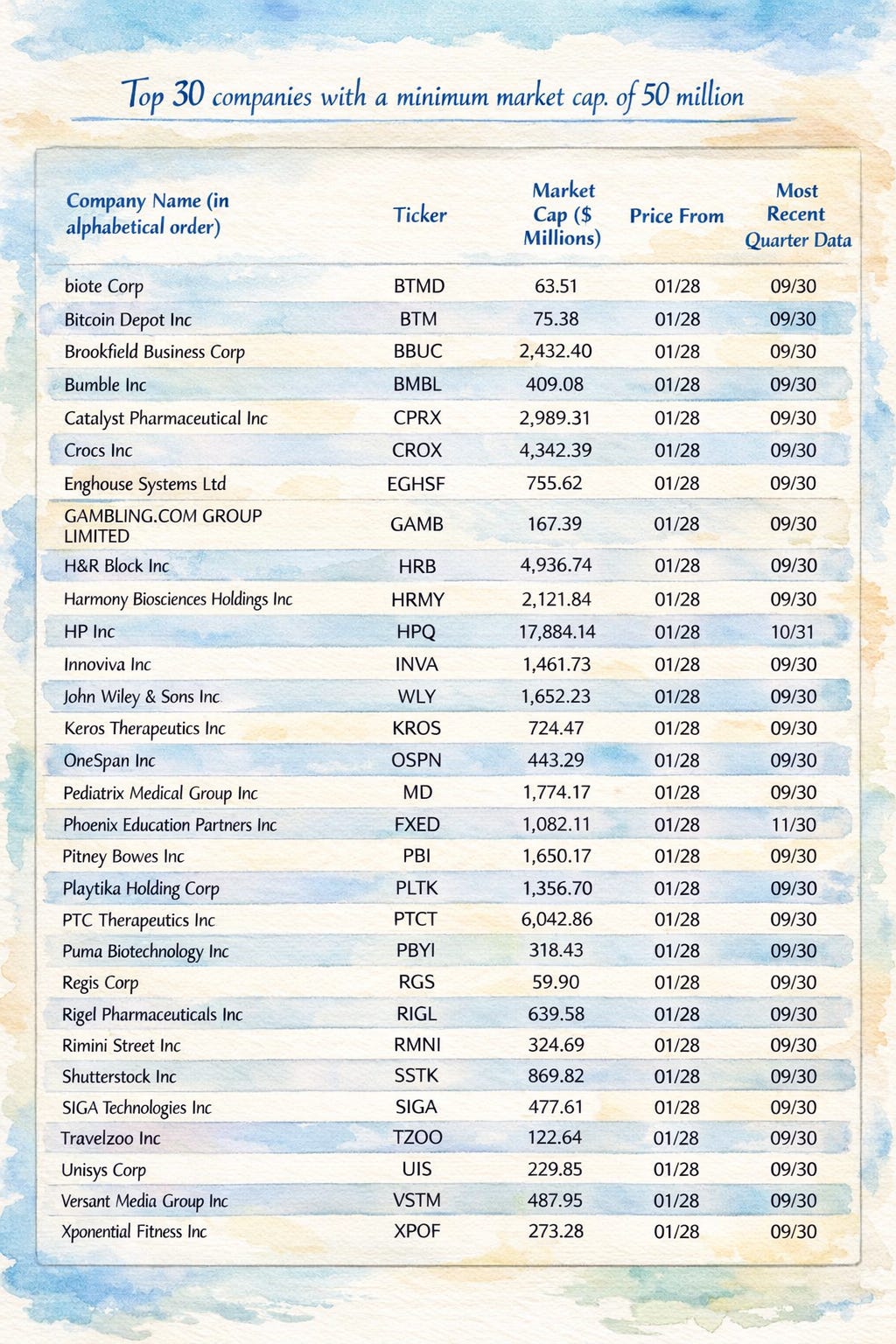
Screening: Rank the top 3,500 companies by these two factors and combine the ranks.
Portfolio Construction: Buy the top 20–30 highest-ranked companies.
Holding Period: Hold for exactly one year.
The Behavioral Barrier
If this formula is so “magic,” why isn’t everyone a billionaire?
Because the formula is boring, mechanical, and occasionally looks like a failure.
Greenblatt is brutally honest: the Magic Formula can underperform the market for 2–3 years at a time. Most investors—even the pros—cannot handle that. They see the S&P 500 going up while their “Magic” stocks sit still, and they quit right before the formula begins to work again.
The Drawdown Reality
To get those 50% returns, Greenblatt had to endure periods where his “rational” picks were hated by the market. He argues that the strategy only works because it is sometimes unsuccessful in the short term; if it worked every single month, everyone would do it, the prices would bid up, and the “Magic” would disappear.
Steal Their Brain: The Greenblatt Toolkit
1. The “Simple Metaphor” Test
The Concept: If you can’t explain why a business makes money to a sixth-grader, you shouldn’t own it. Greenblatt uses gum-selling and broccoli stands to demystify billions.
Actionable Rule: Write down your investment idea. If it requires more than three sentences or uses words like “synergy” or “paradigm shift,” discard it.
2. The “Different Mistakes” Rule
The Concept: “I’d rather read other people’s mistakes and make different ones.”
Actionable Rule: Study the “Graveyard” of other investors. Before buying a stock, look for a “Short Report” or a bear case. Don’t try to be right; try to avoid being stupid in the same way others were.
3. The Tax-Loss Seesaw
The Concept: Professionalize your selling schedule.
Actionable Rule: Sell your “losers” a week before the one-year mark to realize tax losses. Sell your “winners” a week after the one-year mark to qualify for long-term capital gains.
The Human Factor: The Ethical Investor
Despite his hedge fund success, Greenblatt isn’t a “Wolf of Wall Street” type. He is a family man who writes books for his children to help them understand the world. His 2020 book, Common Sense, even tackles social and economic equality from an investor’s perspective.
He’s the guy who co-founded the Value Investors Club, an elite community where the best ideas win based on logic, not seniority. He lives by the “Idea Meritocracy” long before it became a tech buzzword.
The Verdict: Should You Use the Magic?
Copy this style if:
You are a disciplined “Stoic” who can ignore the news for a year at a time.
You believe that math beats “gut feel” over the long run.
You want a low-maintenance system that doesn’t require 40 hours of research a week.
Run away if:
You crave the dopamine hit of checking your stocks every hour.
You want to find the “Next NVIDIA” (The formula often picks boring retailers or fertilizer companies).
You cannot handle three years of underperformance without panicking.
Joel Greenblatt taught us that the market is a “weighing machine.”
It might be a “voting machine” today, but if you buy good, cheap companies and wait, the scale will eventually tip in your favor.
Think of the "Magic Formula" like a strict diet of broccoli and chicken breast. We know it builds a healthy body (wealth) over time. But when you see your neighbor eating pizza and losing weight (buying meme coins or hot tech stocks and getting rich fast), you feel like an idiot. The hardest part isn't the math; it's the FOMO. Greenblatt’s genius isn't the formula; it’s having the stomach to look like a loser for two years so you can win for the next twenty.