


You probably already read page up and page down about Situational Awareness getting tunnel vision last week and having to sell their public stock portfolio to Citadel.
And the name Leopold Aschenbrenner has been circling around for a while, but I think it is safe to say that it has never been trending more than right now.

In 2024, he published an essay series called “Situational Awareness: The Decade Ahead,” arguing that AGI could arrive by 2027 and that the buildout of chips, compute, memory, and energy would be the investment story of the decade.
Then he did something I guess few had expected: he turned the essay into a hedge fund.
Situational Awareness grew from a few hundred million dollars to more than $20 billion in under two years. The fund was backed by names like Jane Street, the Collison brothers, Nat Friedman, and Daniel Gross.
And we don’t need to look further back than June 2026 to see that his fund was reportedly up 439% for the year.
Then… July happened.
AI stocks got destroyed. Core positions in his portfolio reportedly fell 35% to 47%. And because the fund was running leverage (the good ol’ LTCM story comes to mind) reported at around 4x, Leopold got smoked.
The prime brokers issued margin calls. The fund needed cash it didn’t have.
His conviction about AI’s long-term trajectory was correct, and it didn’t matter.
Within roughly a day, the bulk of Situational Awareness’s public equity portfolio, valued around $16 billion before the sale, was sold at a discount.
To the man in the illustration below.
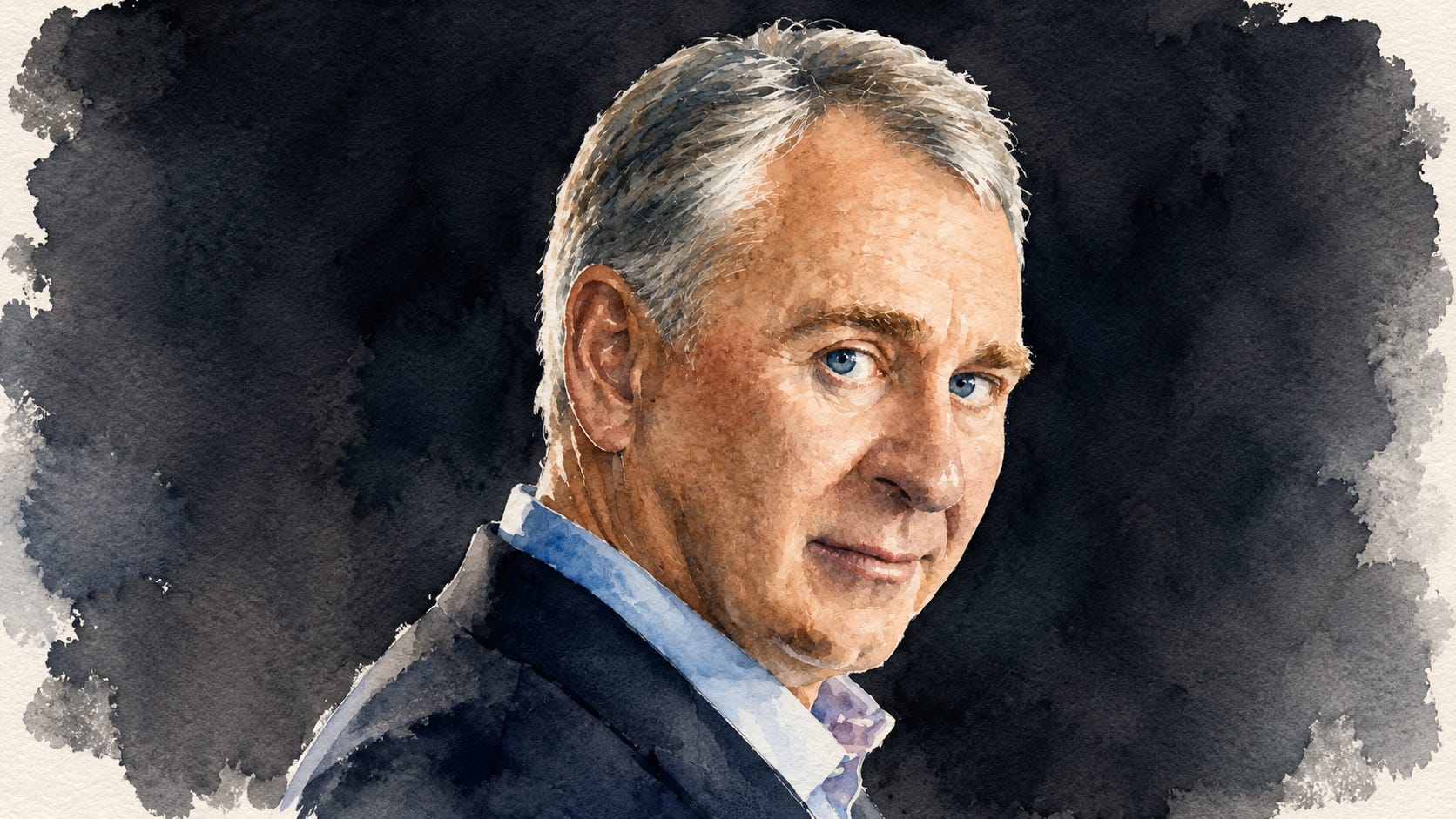
Ken Griffin.
Aschenbrenner tripled his investors’ money in six months. And he still ended up as the forced seller, watching a wily 57-year-old carry his portfolio out the door, halfway through the year.
The scene-of-the-accident investor
Griffin says he has spent his life “at the proverbial scene of accidents where other firms have gone awry.”
This is his playbook, and he has run it for decades:
Enron, 2001. The day Enron filed for bankruptcy, Griffin chartered a Gulfstream, put 16 people on it, and flew straight to Houston. Not the next week. The day. For several days his team interviewed Enron’s traders. What worked, what didn’t, how the business actually made money, who the best people were. Enron’s own head trader later wrote that Citadel probably interviewed several hundred employees, at every level and every function, essentially reverse-engineering the entire energy trading business through job interviews. Griffin then hired the leadership of Enron’s quantitative research team. He says Citadel has made $30 billion in commodities since.
LTCM, 1998. When Long-Term Capital Management imploded, 30-year-old Griffin went and met with its senior people. His question was specific: how does a levered financial firm lose 90% of its equity and still keep control of its business? He wasn’t gawking. He was taking notes. He has said that what he learned from LTCM’s survival mechanics was “existentially important” to Citadel a decade later.
Amaranth, 2006. Sowood, 2007. E-Trade, 2008. When Amaranth lost $6 billion on natural gas, Citadel and JPMorgan bought the energy book. When Sowood blew up a year later, Citadel took the distressed portfolio. The pattern is so established that when a levered fund gets in trouble, Citadel’s phone number is essentially the first call.
Notice what connects all of this?
Griffin treats other people’s blowups as discounted tuition.
He has a line about learning that I think about often: your own losses are the most expensive education in America, so study the other guy’s losses instead. They cost you nothing and teach you almost as much.
Situational Awareness is simply the latest accident scene. And Griffin arrived, as always, with cash and a checklist.
The veteran’s secret: he was Leopold once
Griffin knows exactly what Aschenbrenner is feeling right now, because in 2008 he lived it.
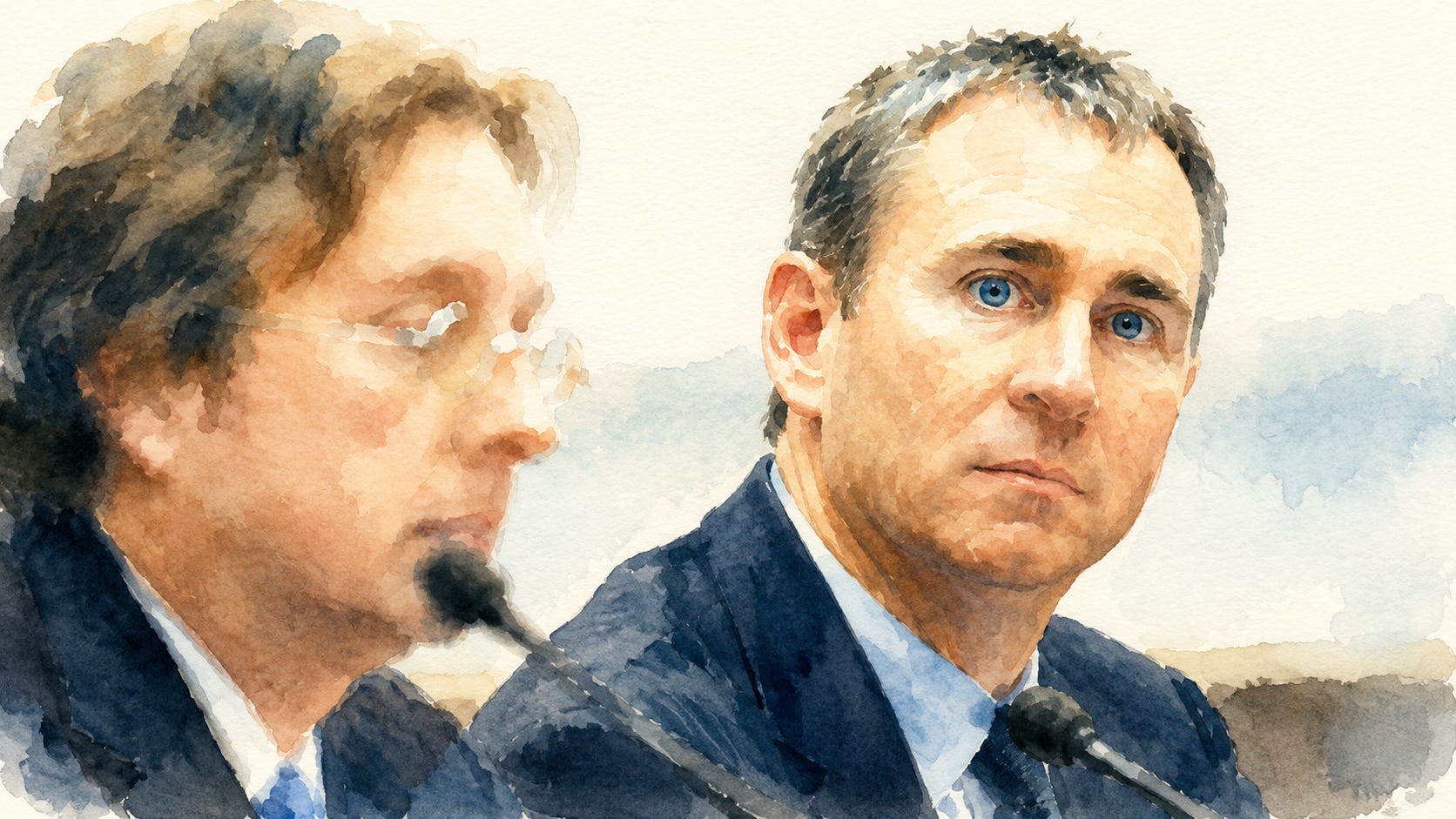
Citadel lost half its equity in 16 weeks during the financial crisis. This was a firm that had never even had a double-digit drawdown in almost two decades.
Griffin has described riding the elevator down from his apartment one morning thinking;
I hope we’re still in business at the end of the day.
He called Lloyd Blankfein at Goldman and asked when the carnage would end. Blankfein’s answer: a forest fire ends when there’s nothing left to burn.
But Citadel survived. Barely.
In 2008, firms like Citadel and Lehman had bank-like funding without bank-like backstops. Access to credit didn’t just get expensive in the crisis. It ceased. Griffin rebuilt Citadel so it could never again be the one forced to sell.
Which brings me back to what happened last week:
Both men had the same conviction about AI. The difference, however:
One of them had a capital structure that could survive being right too early.
The other had 4x leverage and lenders with margin clauses.
You can probably see for yourself which one has the more solid setup.
The machine that Ken built
Research first, always.
Griffin describes Citadel in one sentence: “It’s a research business first and foremost, and trading is simply how we monetize our research.” Whether it’s stock picking or hiring meteorologists to forecast weather for commodity trades, the edge is built before the trade is placed. The trade is just the cash register.
Study your winners.
Griffin argues most investors obsess over their losers and never dissect their winners. His view: you make money in this business when you have winners, so figure out what you got right and do more of it.
Play hardball.
There’s a book Griffin reportedly pushes on people at Citadel, an out-of-print title called “Hardball: Are You Playing to Play or Playing to Win?”
His summary of it: in business, you don’t play to win. You play to win by a landslide, because if you don’t, your competitors come back. The Enron jet story is what that looks like in practice.
Forge talent under pressure.
Citadel got around 100,000 applications last year. Griffin says he’s talking to candidates constantly. And he explicitly values people who have been through fire. His phrase: “It’s the price paid in losses and pain that converts into wisdom.”
Seven things Griffin knows that a 450% return can’t teach you
1. Survival comes before returns.
Buffett says it as “never lose money.” Griffin lives it as capital structure. A 439% half-year means nothing if the structure underneath it can’t absorb one bad month. The first question about any position, any fund, any strategy: what has to happen for me to become a forced seller? If the answer is “a normal correction,” you don’t have a strategy. You have a countdown.
2. Leverage converts being right into being dead.
Aschenbrenner’s thesis is probably still correct. AI infrastructure will likely be built out roughly as he described. At 4x leverage, none of that mattered.
Yes, leverage can amplify returns. But it at the same time hands your conviction to your lender. And your lender has no conviction at all. Only collateral requirements.
3. Study accidents and be opportunistic.
Griffin flew to Houston the day Enron filed. He interviewed LTCM’s people while the scars were fresh.
Most of us read the post-mortem article a year later and move on. The discipline of asking “what exactly killed them, and am I exposed to the same thing?” while it’s happening is free education. This piece is my attempt to do exactly that.
4. Your edge has a half-life.
Griffin’s original edge, using math and software to price convertible bonds, was revolutionary in 1990 and is a free spreadsheet template today. His response was to keep building new edges for 35 years.
Whatever advantage you think you have, someone is commoditizing it right now. The durable edge is the ability to keep finding edges.
5. Adversity is an asset on the buyer’s balance sheet.
Griffin says people who started their careers in 2008 navigate crises “as if it’s a walk in the park” 15 years later. Pain compounds into judgment.
This is also why I’d hesitate to write Aschenbrenner off. The most dangerous version of him is the one that launches in 2029.
6. Position yourself to be the buyer when others must sell.
Griffin got a $16 billion portfolio at a discount because he spent 18 years after 2008 making sure Citadel would always have liquidity when the market doesn’t.
For us small investors, the equivalent is boring: cash reserves, no leverage, a watchlist with prices already decided. The Bunker exists precisely so that when quality goes on fire sale, you’re the one holding the extinguisher and the checkbook.
7. Time is the only filter that matters.
Aschenbrenner ran the most successful fund launch in memory for 24 months. Griffin has compounded for 35 years, and his most profitable years came after year 30. Every truly great record is long before it’s spectacular. Optimize for still being here in 2046.
The twist at the end
Here’s the detail that reframes the whole story, and most of the coverage buried it.
Citadel already owned some of the same AI infrastructure names before this deal. Griffin isn’t betting against Aschenbrenner’s thesis. He’s basically betting on it.
He just structured himself so he could buy the thesis at a discount from someone who couldn’t afford to hold it.
Both men looked at the same future and agreed. The difference between them was never intelligence, and it was never conviction.
The difference was that one of them built a structure that lets him be wrong for six months without dying.
Leopold had a thesis. Griffin has a machine. And in markets, over any timeline that matters, the machine eats the thesis.
The question I’m sitting with this week, and the one I’ll leave you with: if your highest-conviction position dropped 40% next month, would you be the one buying more, or the one getting the phone call?
Griffin decided his answer in 2008. Aschenbrenner just got his. Make sure you know yours before the market asks.
Sources: reporting from Reuters, the Financial Times, the Wall Street Journal, Bloomberg, and CNBC on the Citadel and Situational Awareness transaction (July 2026); Ken Griffin’s public interviews, including his talks at Yale, Stanford GSB, the Milken Institute, and the Norges Bank Investment Management podcast; John Arnold’s account of Citadel’s Enron recruitment. Figures on the transaction are based on press reports citing people familiar with the deal and may be revised.
Nothing here is investment advice. It’s one investor thinking out loud in the Bunker.
Leopold’s blow‑up came from a simple mix of too much borrowing, no hedges, and not taking profits when he should have. He used heavy margin to buy a huge position that was going up, but because he borrowed so much, even a sharp drop would make him owe the broker more than he had. When volatility spiked, the broker got nervous, froze his account, and liquidated the position to protect themselves. His trade was still up, so he likely kept some profit, but nowhere near what he could’ve made if he had managed risk better and sold earlier.
This should be THE cautionary tale for all AI buildout investors. You can be right about the stocks and still get absolutely wrecked if you use leverage without a strategic stop-loss.