


Disclaimer: Rumbu is a small company with thinly trades shares. Do your own due diligence. This article is not investment advice.
The Setup
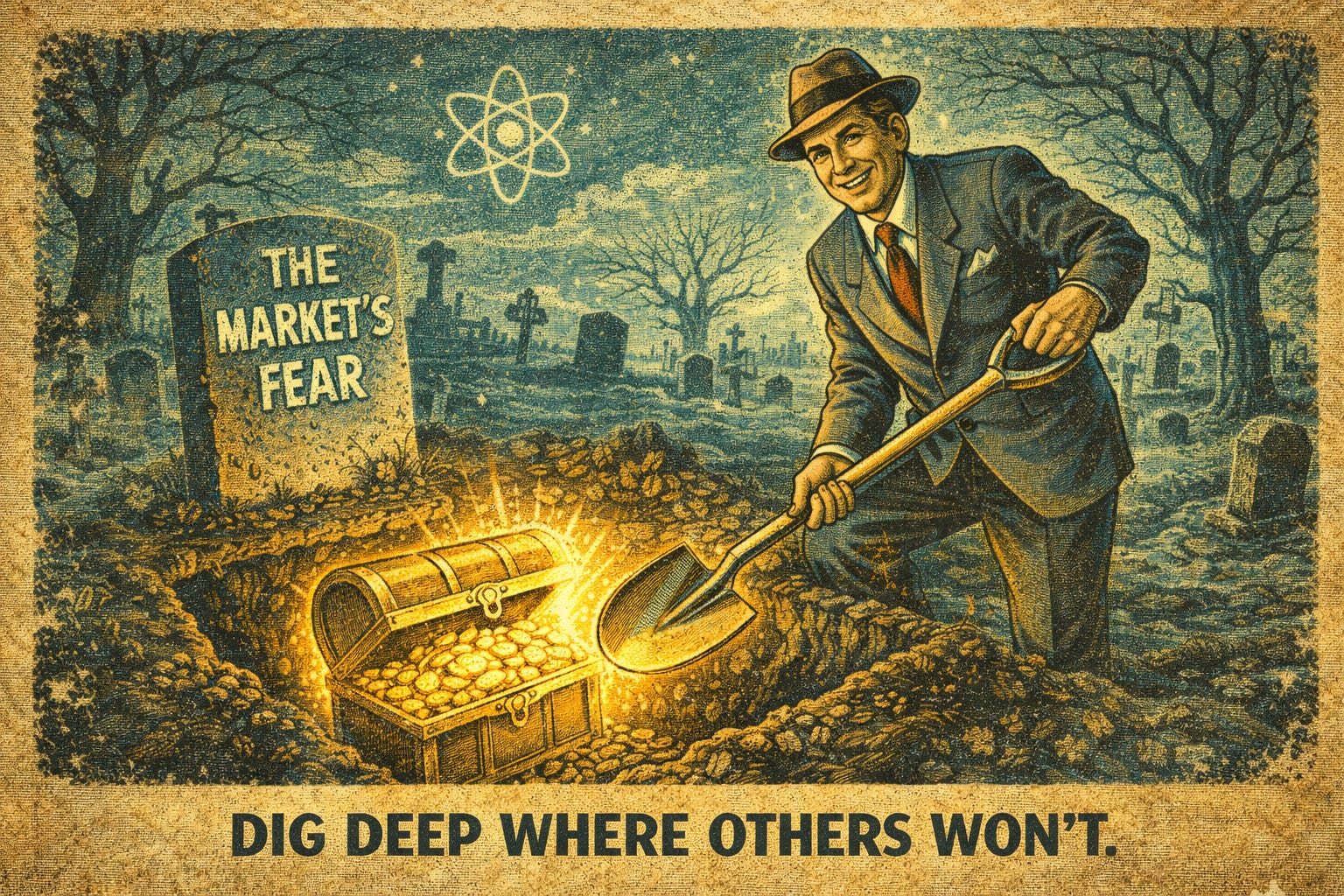
We are looking at Rumbu Holdings today because it is the financial equivalent of a “memento mori.” While the rest of the market is hyperventilating over AI and microchips, Rumbu is quietly rolling up funeral homes in Western Canada. This is a classic “Peter Lynch” play: a business so boring and filled with “ick factor” that Wall Street won’t touch it with a ten-foot pole.
But don’t let the somber attire fool you. This nano-cap (Market Cap: ~$7-10M CAD) is growing like a weed in a graveyard, posting triple-digit revenue growth.
Atomic Stake: I don’t own shares, mostly because with a daily volume often under 10k shares, buying in is harder than getting a reservation at Dorsia.
Balance Sheet (The Geiger Test)
Put on your hazmat suits, folks. This is where it gets messy.
Liquidity: The company explicitly acknowledges a working capital deficit of ~$5.0M as of March 31, 2025. In the corporate world, this usually means “we can’t pay our bills over the next 12 months without moving money around.” They are dependent on generating cash or finding new financing to stay a “going concern”.
Debt Load: Total debt stood at $7.4M recently. With a Net Debt/EBITDA ratio hovering around 4.6x, this is highly levered.
The Safety Net: Before you run for the hills, note that this debt is largely secured by real estate (land and buildings). Unlike a tech company borrowing against “intellectual property” (which evaporates), Rumbu borrows against dirt and bricks.
Atomic Take: This balance sheet is technically radioactive. A working capital deficit is never pretty. However, because the debt is backed by tangible assets and the cash flows are as predictable as the tides (or death), it’s a calculated risk rather than a suicide mission. They are walking a tightrope, but at least there’s a net.
Rumbu is rolling up funeral homes. If you like this 'buy and build' strategy but prefer tech to undertaking, check out Nodebis Applications (NODE), which is applying the same logic to Swedish software.
Cash Flow (Energy Output)
Finally, some signs of life in the land of the dead.
Operational Cash Flow (OCF): Rumbu is actually generating cash. In H1 2025, they posted $425k in operating cash flow.
Free Cash Flow (FCF): They are turning positive here as well.
The Model: This is a “roll-up” strategy. They buy “mom & pop” funeral homes (often from retiring Boomers) for 3-5x EBITDA and immediately plug them into a system trading at higher multiples.
Atomic Take: The cash flow is real. This isn’t “adjusted community EBITDA”; it’s actual cash from operations. The concern is that interest payments on that debt pile will eat a significant chunk of this energy output. But so far, the machine is printing.
Share Capital & Insiders (Nucleus Check)
This is the strongest part of the reactor core.
Insider Ownership: Management owns roughly 62% of the company. The CEO, Daryl Locker, isn’t just a suit; he’s an operator with 30 years in the industry.
Dilution: Historically, they have been allergic to dilution. They prefer to finance acquisitions with debt and “vendor take-back notes” (promissory notes to the sellers) rather than printing new shares.
The Catch: There is chatter about a potential “insider-led equity raise” in late 2025 or 2026.
Atomic Take: The nucleus is incredibly dense and stable. When management owns nearly two-thirds of the stock, they don’t tend to do stupid things that wipe out shareholder value. They are using the sellers’ own money (vendor notes) to buy the businesses—a financing strategy I can only describe as “gangster.”

Income Statement (Reaction Chamber)
Boom.
Revenue: Up 538% YoY for Q1 2025. This is inorganic growth fueled by acquisitions, but it’s explosive nonetheless.
Gross Margins: Sitting pretty at roughly 70%.
Profitability: They are targeting a 20% EBITDA margin. The unit economics are robust: a funeral generates ~$7k-$9k in revenue with very consistent costs.
Atomic Take: The reaction chamber is running hot and efficient. High gross margins in a service industry are a thing of beauty. As they scale and centralize back-office functions (accounting, HR), those EBITDA margins should expand further.
The Atomic Verdict
Rumbu Holdings is a fascinating paradox. It operates in the safest industry on earth (demographics guarantee a “bull market” in mortality for decades ), yet it carries a balance sheet that looks like a leveraged buyout gone wild.
The working capital deficit is a siren blaring in the distance. However, the massive insider ownership and the tangible asset backing provide a significant shield. This is a “compounder” in the early stages, disguised as a distressed asset.
Status:
RADIOACTIVE (With Potential)
(Rating Justification: The “Radioactive” tag is mandatory due to the Working Capital Deficit and high leverage (4.6x Net Debt/EBITDA). However, the high insider ownership and recession-proof business model make this a highly potent, albeit volatile, isotope. Handle with extreme care.)
The Bottom Line: If you can stomach the illiquidity and the debt load, you are buying a 70% gross margin business run by fanatics who own the majority of the stock. Just don’t expect to sell your shares quickly if the music stops.
Disclaimer
The content within Atomic Moat Research is designed to be a “bolt-on” intelligence layer to your own due diligence, not a replacement for it. I conduct these deep dives to decode financial statements and valuation models for the rational retail investor.
Independence: I do not accept compensation of any kind from the companies I review. My research is driven solely by my personal search for high-quality compounders.
Skin in the Game: Unless otherwise stated, assume the author holds long positions in the assets discussed. I invest my own real capital alongside my analysis. This creates a bias you should be aware of. While I strive for institutional-grade depth based on the most recent filings, my opinions are my own. I am not a financial advisor. All readers are encouraged to perform their own due diligence prior to deploying capital.